
The short answer
If your garage is attached to the house, has AC ductwork running through it, or doubles as a workshop or living space, an insulated door earns its keep. If it's a detached storage shed for the mower and beach chairs, you're mostly paying for marketing. R-value on a garage door almost never saves you money the way it does on a wall or attic in Florida — what it actually buys you is noise control, dent resistance, and a stiffer door that handles wind load and daily abuse better.
What R-value actually measures
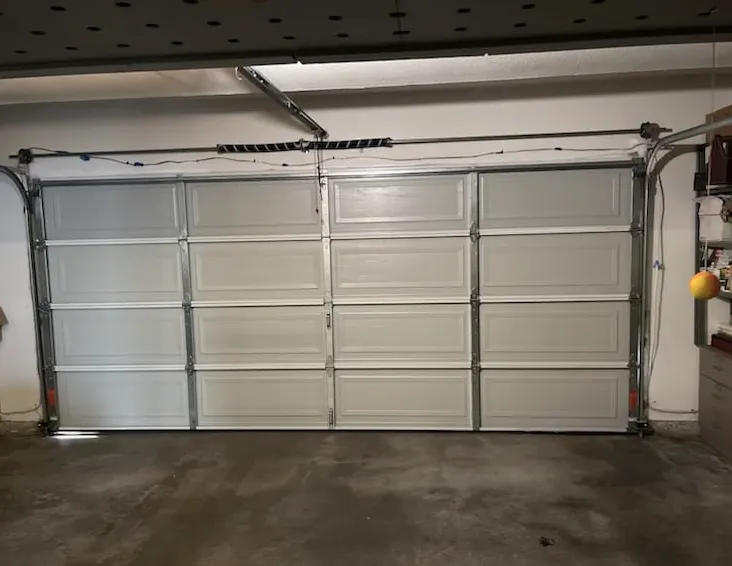
R-value measures resistance to heat transfer through the door panel itself. A single-layer steel door has an R-value near zero. Add a foam core and you get numbers that manufacturers love to print on brochures — often R-6 to R-18 depending on foam type and thickness.
- Polystyrene (EPS): rigid foam boards glued or clipped inside the panel. Cheaper, moderate insulation, can shift or rattle over time.
- Polyurethane: foam injected and expanded in place, bonding to both steel skins. Higher R-value for the same thickness, and it stiffens the whole panel because the foam itself becomes part of the structure.
That last point matters more in this climate than the R-value number does.
Why temperature insulation isn't the real selling point here
In a lot of the country, insulated doors matter because they keep a heated garage from bleeding warmth in January. Bay Pines doesn't have that problem. Our garages don't need to stay warm — they need to not act like an oven that pushes heat into the house, and they need to survive humidity and storms. An insulated door will shave a few degrees off peak garage temperature on an August afternoon, but it won't transform your utility bill unless the garage is directly tied into your home's conditioned air.
Where it genuinely helps with heat
- Garage used as a home gym, office, or playroom
- AC or ductwork routed through or near the garage ceiling
- A wall shared with a bedroom or living room, where heat soak raises the room temperature
Where it doesn't change much
- Detached garages used purely for parking and storage
- Garages with a vented, uninsulated ceiling anyway, letting heat escape regardless of the door
The reasons that actually matter in this climate
This is where the argument usually gets settled, because insulated doors solve three problems that have nothing to do with R-value math.
Condensation and rust
Afternoon downpours followed by thick humidity cause temperature swings on an uninsulated steel door, and that leads to condensation forming on the inside skin. Over months, that moisture sits against hardware, hinges, and the bottom seal — prime conditions for rust, especially this close to the coast where salt air accelerates corrosion anyway. A foam-backed panel resists that swing and keeps condensation from forming in the first place.
Noise
A single-skin steel door booms and rattles with every gust, every slam of the car door inside, every roll of the opener's chain. The foam core deadens that considerably, which matters if the garage sits under a bedroom or next to a home office.
Strength under wind load
This is the one spouses usually don't think to argue about. A door with a bonded polyurethane core is structurally stiffer than a hollow single-layer panel, because the foam prevents the steel skins from flexing independently. That stiffness helps the door perform better against the pressure cycling of tropical storm winds, and it resists denting from flying debris or an errant bike. If you're due for a wind-rated door anyway, insulated construction usually comes as part of the upgrade, not an extra decision.
What it costs, in ranges
Non-insulated steel doors typically run cheaper upfront, often a few hundred dollars less than a comparable insulated model in national pricing ranges. Polyurethane-core doors cost more than polystyrene-core doors of the same size. The gap narrows when you account for a non-insulated door needing bottom seal and weatherstripping replacement more often, since it takes more direct abuse from heat cycling without a buffer layer.
How to settle the argument
Ask one question: does anything happen on the other side of that garage wall or ceiling that you care about temperature-wise? If yes, insulation pays off. If the garage is just a box for the car and the holiday decorations, spend the difference on a heavier gauge steel and better weatherstripping instead, and put the insulation money toward wind-rated bracing.
When to call Bay Pines Garage Door Pro
If you're weighing a replacement because your current door is rusting, booming, or flexing visibly in storms, that's worth a look before you buy based on an R-value sticker alone. We handle Garage Door Installation & Replacement and can walk through your actual garage setup — ductwork, shared walls, sun exposure — to tell you honestly whether insulation changes anything for your situation. If you just want your current door tightened up, resealed, and checked for the rust and swelling that coastal humidity causes, our Garage Door Maintenance & Tune-Up service covers that without pushing a full replacement you don't need.
Call Bay Pines Garage Door Pro for straight answers and same-day service throughout Bay Pines, FL.