
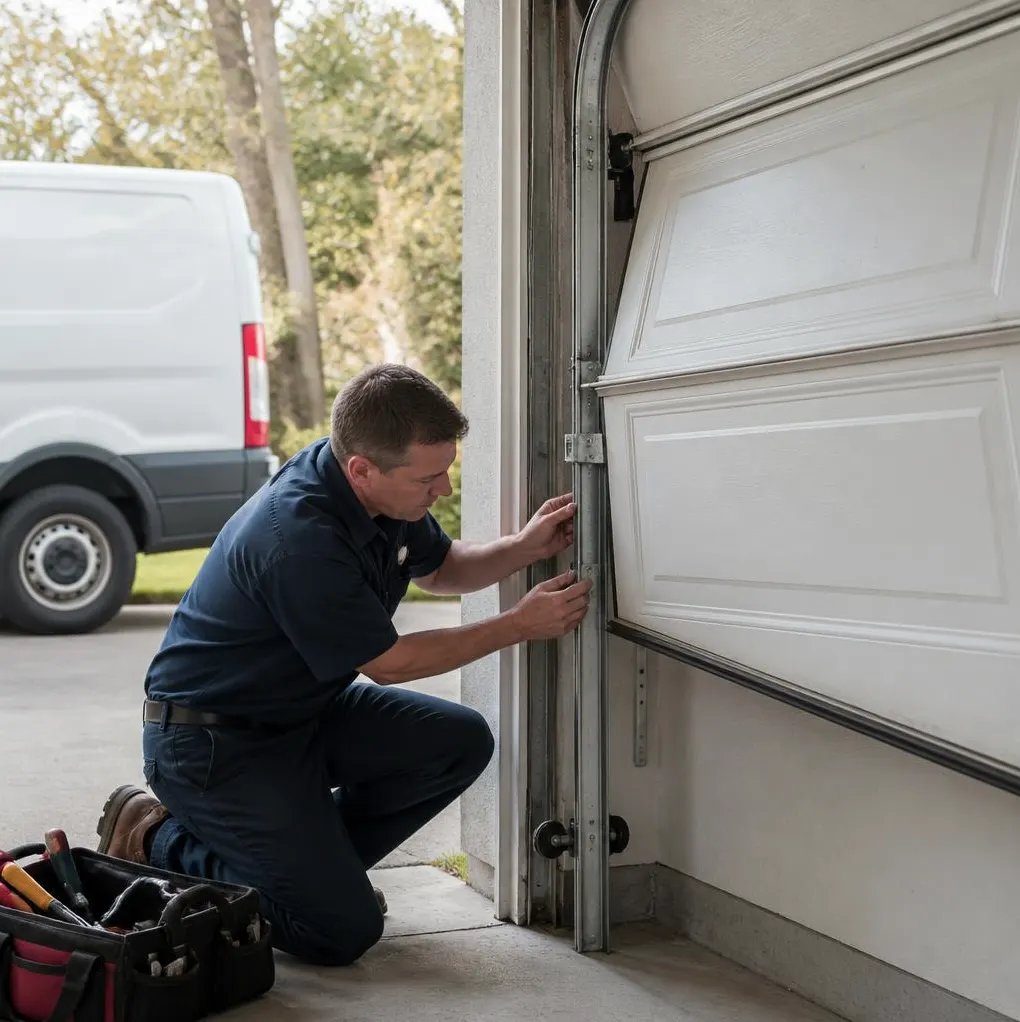
A typical call this time of year starts the same way: "It worked fine all summer, and now it's making this grinding noise every morning." The homeowner hasn't touched the door. Nothing's broken that they can see. But once the technician gets the panel off and checks the springs and rollers, the pattern is obvious - everything got stiff and gritty almost overnight, right around the first cool snap.
Winter in Bay Pines isn't brutal like it is up north, but it's not nothing either. Nighttime temperatures that drop into the 40s and 50s after months of 90-degree heat put real stress on metal parts, and the salt air that's been working on your hardware since spring doesn't take a break just because hurricane season is winding down. Here's what actually needs attention before winter settles in.
Why Mild Temperature Swings Still Matter
Garage door springs and tracks are made of steel, and steel contracts as it cools. A door that's been running on the same tension all summer can suddenly feel heavier, slower, or noisier once the morning air turns crisp. This isn't a malfunction - it's physics - but it does mean the tension and lubrication that worked fine in July may need a fall adjustment.
You'll notice it most on the first truly cool mornings: the opener strains a little harder, there's a pop or shudder partway through the cycle, or the door seems to hesitate before it catches. If that hesitation turns into a full stop or a loud bang, stop using the opener and have someone look at the springs before they fail completely.
Check Weatherstripping Before the Cooler Air Arrives
After a summer of intense UV exposure and near-constant humidity, the rubber seal along the bottom of the door and the vinyl stripping around the frame is often cracked, brittle, or pulling away without anyone noticing. In winter this shows up as drafts, visible daylight gaps at the corners, or small amounts of water pooling inside after a cold-front rain.
Run your hand along the bottom seal and the side stops. If the rubber feels hard and crumbly instead of pliable, it's past its useful life. Replacing it now keeps out cooler drafts, blocks the geckos and palmetto bugs looking for a warm spot, and prevents water intrusion during the occasional winter storm system that rolls through.
Lubricate the Parts That Actually Move
Hinges, rollers, and the torsion spring itself all rely on lubrication to move smoothly, and cooler, drier air thickens whatever grease or oil is left over from summer. A light silicone-based garage door lubricant - not WD-40, which is a cleaner rather than a lubricant - on the hinges, rollers, and springs will quiet down most of the creaking and grinding you'll hear on cold mornings. Wipe off any excess so it doesn't attract dust, and avoid spraying lubricant directly onto the opener's drive chain or belt unless the manufacturer specifically recommends it.
Look Closely at Rust, Especially Near the Coast
If your home is anywhere near the water - Madeira Beach, Treasure Island, or even a few miles inland in Seminole and Pinellas Park - salt air has likely been doing quiet damage to exposed bolts, hinges, and the bottom edge of steel panels all year. Winter is a good time to catch it while it's still surface rust, because once it works into the track or spring coils, it affects how smoothly the door operates and how much tension the springs can safely hold.
Look for orange discoloration around screw heads, along the bottom panel seam, and anywhere water tends to collect after rain. A wire brush and a rust-inhibiting primer can handle small spots; anything that's pitted the metal or compromised a spring coil needs a professional eye.
Test the Sensors and Auto-Reverse
If your door went through any wind-load stress during hurricane season - even without major storm damage - the photo-eye sensors near the bottom of the tracks can shift out of alignment just enough to cause intermittent problems. You might notice the door reversing for no reason, or refusing to close at all with a blinking light on the opener.
Test it: place a piece of scrap wood in the door's path and try to close it. The door should stop and reverse immediately. If it doesn't, or if the sensors' indicator lights aren't both solid and matching, they need to be realigned before you rely on the door around kids, pets, or cars.
Watch What You're Storing in There
Garages fill up fast this time of year with holiday decorations, extra folding chairs, and bins that don't fit anywhere else. The problem comes when boxes get stacked in front of the tracks, against the sensors, or high enough to interfere with the door's travel path. A door that suddenly won't close all the way is sometimes nothing more than a bin that's edged a few inches too far into its path.
When to Call Bay Pines Garage Door Pro
If you're hearing new noises, seeing rust spreading past the surface, or dealing with a door that hesitates, reverses randomly, or feels heavier than it used to, it's worth having it checked before those small issues turn into a weekend without a working garage door. Our Garage Door Maintenance & Tune-Up service covers exactly this kind of seasonal check - lubrication, hardware inspection, sensor alignment, and tension adjustment. If a spring has already started to go, our Garage Door Spring Repair team can usually get it replaced the same day.
Call Bay Pines Garage Door Pro today to get your garage door ready for winter in Bay Pines, FL - we offer same-day service throughout the area.