
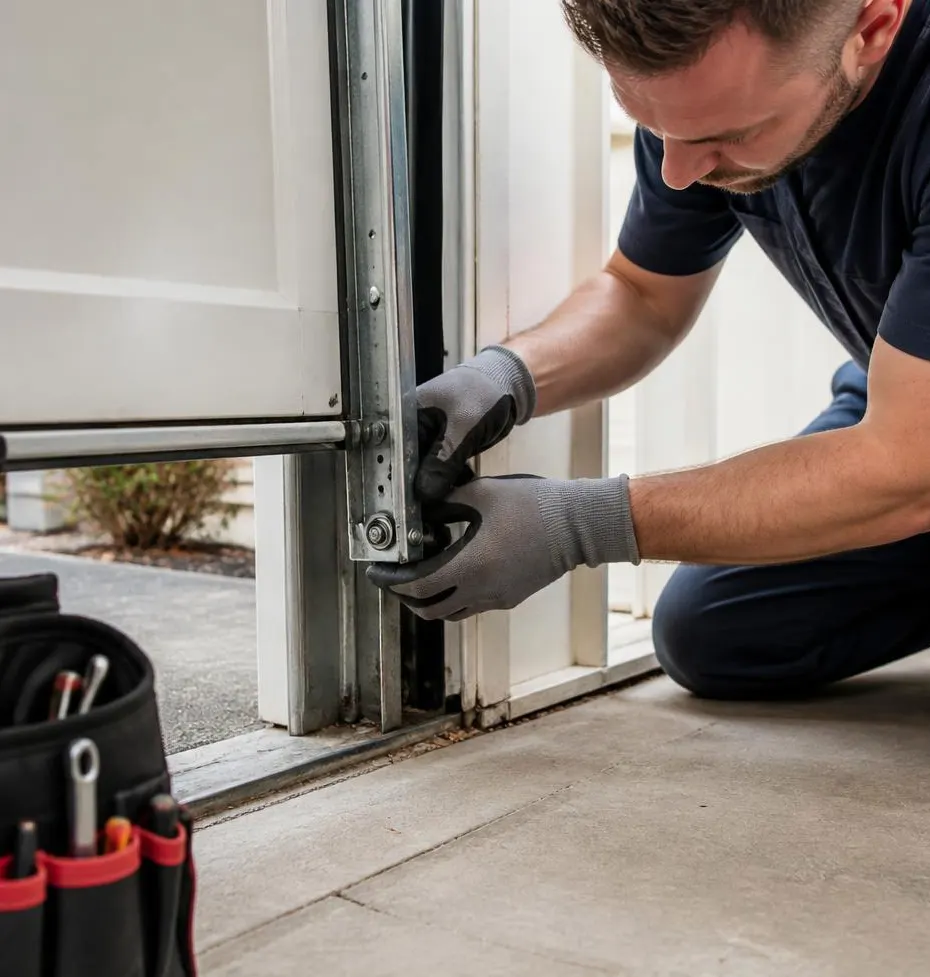
The Moment You Notice
You hit the remote on your way out the door, juggling keys and coffee, and nothing happens. No hum, no click, no movement. You try again, maybe walk over and press the wall button directly. Still nothing — or worse, the door starts to lift, shudders, and stops halfway, leaving your car trapped and you running late. It's one of the most common calls a garage door technician gets, and the good news is that most of the time, the cause is predictable and fixable the same day.
What the Door Is Telling You
Before any tools come out, a technician listens and watches. The way the door fails points to the problem:
- Total silence — no light, no motor sound, no response at all.
- Motor hums but the door doesn't move — power is reaching the opener, but something mechanical is blocking it.
- Door moves a few inches then reverses or stops — the opener thinks something is in the way, or a sensor is unhappy.
- Door is heavy, lopsided, or won't budge even by hand — this points away from the opener entirely and toward the door's hardware.
Each of these narrows down where to look first.
The Order a Technician Checks
1. Power to the Opener
This sounds basic, but it's checked first because it's fast and common. A tripped breaker, an unplugged cord knocked loose during a shelf reorganization, or a GFCI outlet that tripped during one of our afternoon downpours can all cut power without any visible damage. Technicians check the outlet, the breaker panel, and the opener's plug before touching anything else.
2. The Safety Sensors
Every modern opener has two small photo-eye sensors near the bottom of the tracks. If they're misaligned, dirty, or have a cobweb or bit of pollen across the lens, the opener refuses to close or open the door as a safety measure. Humidity and salt air in this area can cause condensation or grime buildup on the lenses faster than in drier climates, so this gets checked early. The fix is usually just realigning or wiping them down — a five-minute job.
3. The Manual Release Cord
If the red release cord was pulled — sometimes by a curious pet, a stored item bumping it, or a previous power outage where someone opened the door manually — the opener is disconnected from the door even though it still runs. The carriage will move on the rail, but the door stays put. Reconnecting it is simple once it's identified.
4. The Springs
If the door is dead weight and won't move even by hand, a broken torsion or extension spring is the likely cause. Springs are the hardest-working part of the system, cycling under tension every time the door moves, and salt-laden air combined with routine humidity speeds up metal fatigue and rust. A snapped spring often makes a loud bang you may have heard earlier in the day. This is not a DIY repair — the stored tension can cause serious injury — and garage door spring repair involves replacing both springs as a set, even if only one failed, since the other is usually close behind.
5. The Cables
Next, a technician checks the lift cables that work alongside the springs. A frayed or snapped cable often shows up as a door that hangs crooked on one side or won't lift evenly. Coastal moisture accelerates fraying at the drum and bottom bracket. Garage door cable repair means replacing the cable and inspecting the drum and bracket for related wear.
6. The Track and Rollers
If the door jumps, grinds, or binds partway through its travel, the track alignment or rollers are checked next. Humidity causes wood-composite doors to swell slightly, which can cause panels to bind in tracks that were previously fine. Bent track from an accidental bump, or rollers worn from years of swelling-and-drying cycles, both show up here. This is also where off track door repair comes in if the door has fully jumped the rail.
7. The Opener Motor and Gear
Last on the list because it's the least common failure point: a stripped internal gear or a burnt-out motor. If everything else checks out — power, sensors, release cord, springs, cables, and track — and the opener still hums without moving the door, the gear kit inside the unit has likely worn out. Depending on the opener's age, this may mean a repair or a full garage door opener installation with a newer, more reliable unit.
When to Call Bay Pines Garage Door Pro
If your door won't open and you've confirmed it's not a simple power or sensor issue, stop trying to force it — especially if you suspect a spring or cable, where a DIY attempt can be dangerous. Bay Pines Garage Door Pro offers same-day garage door spring repair and garage door cable repair, along with full diagnostics if the cause isn't obvious. We'll walk through this same checklist on-site, explain exactly what failed, and give you straightforward pricing before any work begins.
If your garage door in Bay Pines, FL won't open, call Bay Pines Garage Door Pro today for fast, honest, same-day service.